
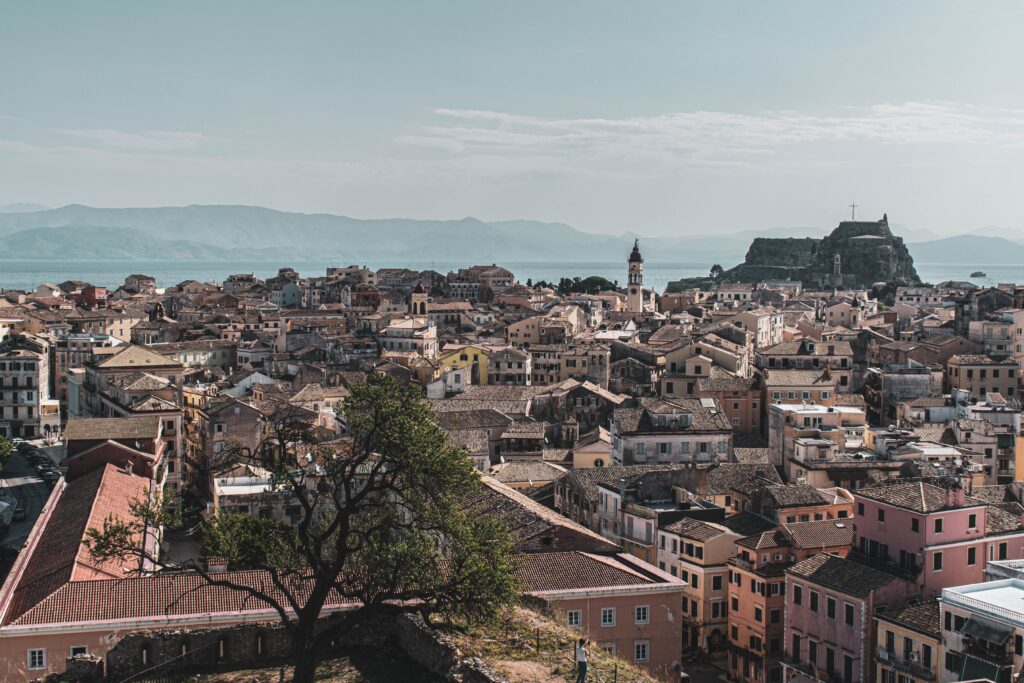
According to Homer, Scheria was the homeland of the Phaeacians, a seafaring people renowned for their exceptional shipbuilding skills, hospitality and close relationship with the gods.
Unlike other kingdoms described in the Odyssey, the land of the Phaeacians appears almost magical, rich in fertile gardens, magnificent palaces and peaceful harbours. Their legendary king, Alcinous, ruled alongside Queen Arete, whose wisdom and influence were admired throughout the kingdom.
Unlike other kingdoms described in the Odyssey, the land of the Phaeacians appears almost magical, rich in fertile gardens, magnificent palaces and peaceful harbours. Their legendary king, Alcinous, ruled alongside Queen Arete, whose wisdom and influence were admired throughout the kingdom.
The island plays a pivotal role in the final chapters of Odysseus’ long journey home. After surviving a devastating shipwreck caused by Poseidon, Odysseus washes ashore on Scheria exhausted and alone. There he is discovered by Princess Nausicaa, daughter of King Alcinous, while she is washing clothes with her companions by a river. Rather than fearing the unknown stranger, Nausicaa demonstrates the generosity and compassion for which the Phaeacians become famous throughout the epic. She guides Odysseus towards the royal palace, where he is welcomed with exceptional hospitality.
One of the defining themes of the Odyssey is xenia, the ancient Greek concept of hospitality, and nowhere is this virtue presented more clearly than in the kingdom of the Phaeacians. King Alcinous offers Odysseus shelter, food and protection before even asking his identity. During a grand banquet, the blind bard Demodocus sings heroic tales of the Trojan War, moving Odysseus to tears and eventually prompting him to reveal his true identity. Deeply impressed by his story, the Phaeacians prepare one of their famous ships to escort him safely back to Ithaca, bringing his ten-year journey to an end.
The association between Corfu and Scheria has inspired generations of travellers, historians and archaeologists. Although Homer never explicitly names Corfu, many geographical descriptions correspond remarkably well with the island’s natural landscape. Sheltered bays, lush vegetation, fertile plains and strategic coastal positions all support the traditional identification. Even today, several locations across Corfu are linked by local tradition to episodes from the Odyssey, offering visitors a unique opportunity to connect literature with the island’s breathtaking scenery.
Exploring these legendary places is one of the highlights of visiting Corfu. From the picturesque coastline to its charming villages and historic landmarks, the island offers countless opportunities to discover the landscapes that may have inspired one of the greatest works of world literature. Choosing a reliable Corfu car rental allows visitors to comfortably explore these mythical locations at their own pace while experiencing both the island’s rich cultural heritage and its spectacular natural beauty.
Today, Corfu continues to captivate visitors not only for its beaches and Venetian architecture but also for its enduring connection to Homeric tradition. Whether or not Scheria was truly Corfu may never be proven with certainty, yet the island’s mythical atmosphere continues to bring the timeless story of Odysseus vividly to life.