
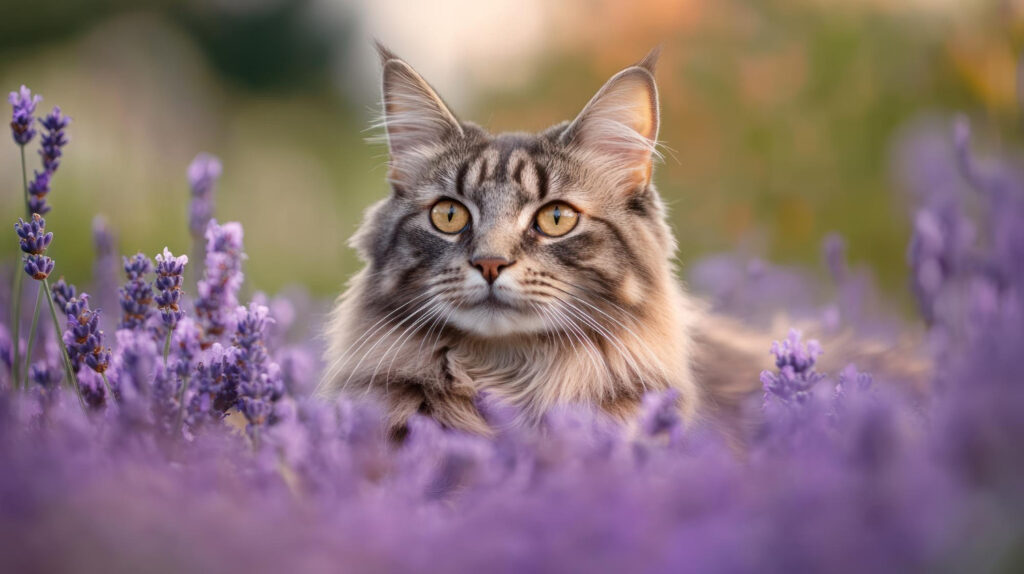
Simply smelling a lavender plant is generally less concerning than eating it, but lavender is not considered a cat-safe plant. Lavender essential oil presents a greater risk because of its high concentration and should be kept away from cats.
Lavender is loved for its distinctive fragrance, attractive purple flowers, and calming reputation. But if you share your home with a cat, you may wonder whether even the smell of lavender could be harmful. So, is lavender safe for cats?
The answer depends heavily on what kind of lavender exposure we are talking about.
Can Cats Safely Smell a Lavender Plant?
A cat briefly smelling a living lavender plant is generally different from chewing or ingesting it. Lavender contains compounds that cats do not process efficiently, so allowing a cat to eat the flowers, stems, or leaves is not recommended.
For that reason, the safest approach is to keep lavender plants somewhere your cat cannot chew them.
If your cat merely walks past lavender growing outdoors or briefly investigates the scent of a plant, that is substantially different from consuming lavender or being exposed to concentrated lavender products.
Lavender Plants vs. Lavender Essential Oil
This distinction is particularly important.
| Type of exposure | Level of concern |
|---|---|
| Briefly smelling a lavender plant | Lower |
| Eating lavender leaves or flowers | Concerning |
| Lavender essential oil on fur or skin | Higher |
| Licking lavender essential oil | Potentially dangerous |
| Prolonged exposure to concentrated oil vapor | Best avoided |
Lavender essential oil is highly concentrated. Cats can potentially be exposed through ingestion, skin contact, grooming contaminated fur, or inhalation of concentrated droplets or vapors.
For this reason, do not apply lavender essential oil directly to a cat, its bedding, or its fur unless specifically instructed by a veterinarian.
What Symptoms Should You Watch For?
If your cat has eaten lavender or been exposed to lavender essential oil, watch for unusual symptoms such as vomiting, reduced appetite, lethargy, drooling, weakness, or difficulty breathing.
Contact a veterinarian promptly if significant exposure has occurred or symptoms develop. Do not try to induce vomiting or administer a home remedy unless a veterinary professional instructs you to do so.
Ultimately, having lavender nearby and allowing direct exposure are two different things. If you own cats, keeping lavender and especially concentrated essential oils inaccessible is the safest choice.