
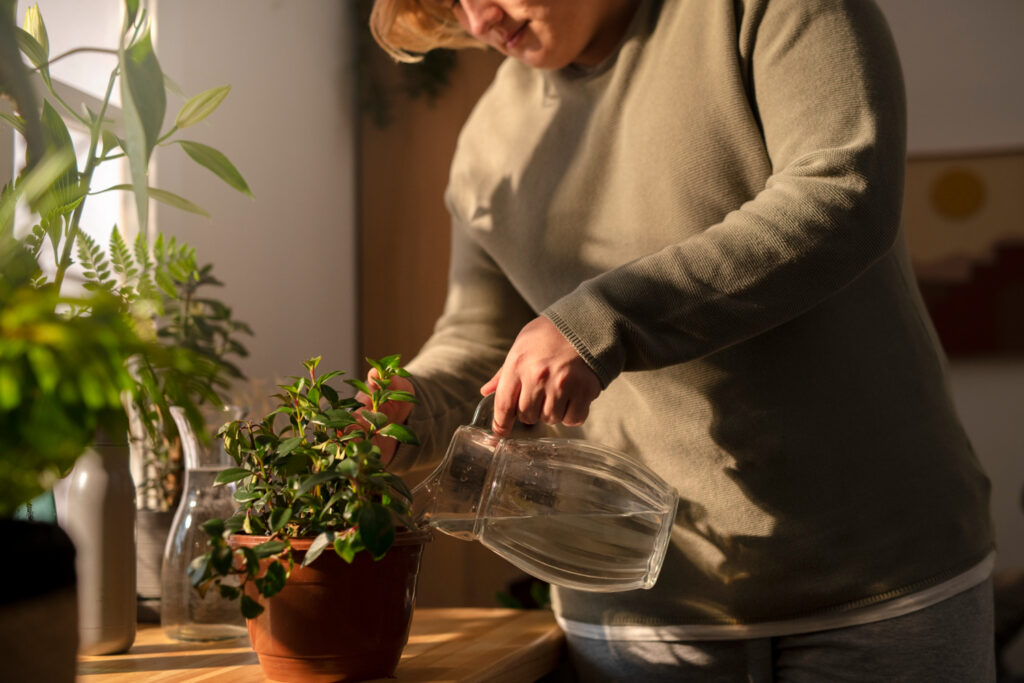
There is no universal watering schedule that works for every plant. How often you should water plants depends on the plant species, soil, temperature, humidity, season, and whether it is growing indoors, outdoors, or in a container.
Watering sounds like one of the simplest parts of plant care, yet overwatering and underwatering are among the most common problems gardeners encounter.
Instead of automatically watering every few days, learn to recognize when your plants actually need moisture.
How Do You Know When a Plant Needs Water?
Checking the soil is usually more reliable than following a fixed schedule.
For many common houseplants, insert your finger about an inch or two into the soil. If it still feels moist, watering can usually wait. If it feels dry, the plant may be ready for another drink.
However, different plants have very different requirements.
| Plant Type | General Watering Approach |
|---|---|
| Snake plants | Let soil dry thoroughly |
| Succulents | Water deeply, then allow soil to dry |
| Tropical houseplants | Often prefer more consistent moisture |
| Herbs | Check regularly; many dislike completely dry soil |
| Outdoor containers | May need frequent watering during hot weather |
What Affects Watering Frequency?
Light and temperature make a major difference. Plants growing in warm, bright conditions generally use water faster than those kept somewhere cool and shaded.
Containers also dry more quickly than garden soil, particularly small pots. During summer, some outdoor container plants may require very frequent watering.
Season matters as well. Many indoor plants grow more slowly during winter and consequently need less water than during spring and summer.
Your potting mix is another factor. Fast-draining soil loses moisture sooner, while dense soil can remain wet around the roots for much longer.
What Is the Best Way to Water Plants?
When a container plant needs watering, give it enough water to thoroughly moisten the soil rather than repeatedly providing tiny amounts. Pots should have drainage holes so excess water can escape.
Avoid allowing most plants to remain permanently waterlogged, as prolonged wet conditions can deprive roots of oxygen and contribute to root problems.
Ultimately, the best watering schedule isn’t really a schedule at all. Check the plant and its soil first, then water according to what you find.
Once you learn how quickly your individual plants use moisture, knowing when to reach for the watering can becomes much easier.