

































The stage is almost entirely dark when the play begins. A single spotlight reveals an empty wooden chair placed beside a weathered suitcase.
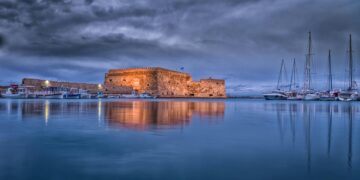
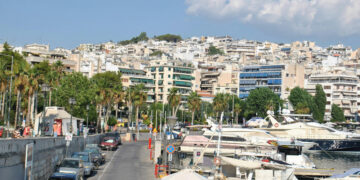
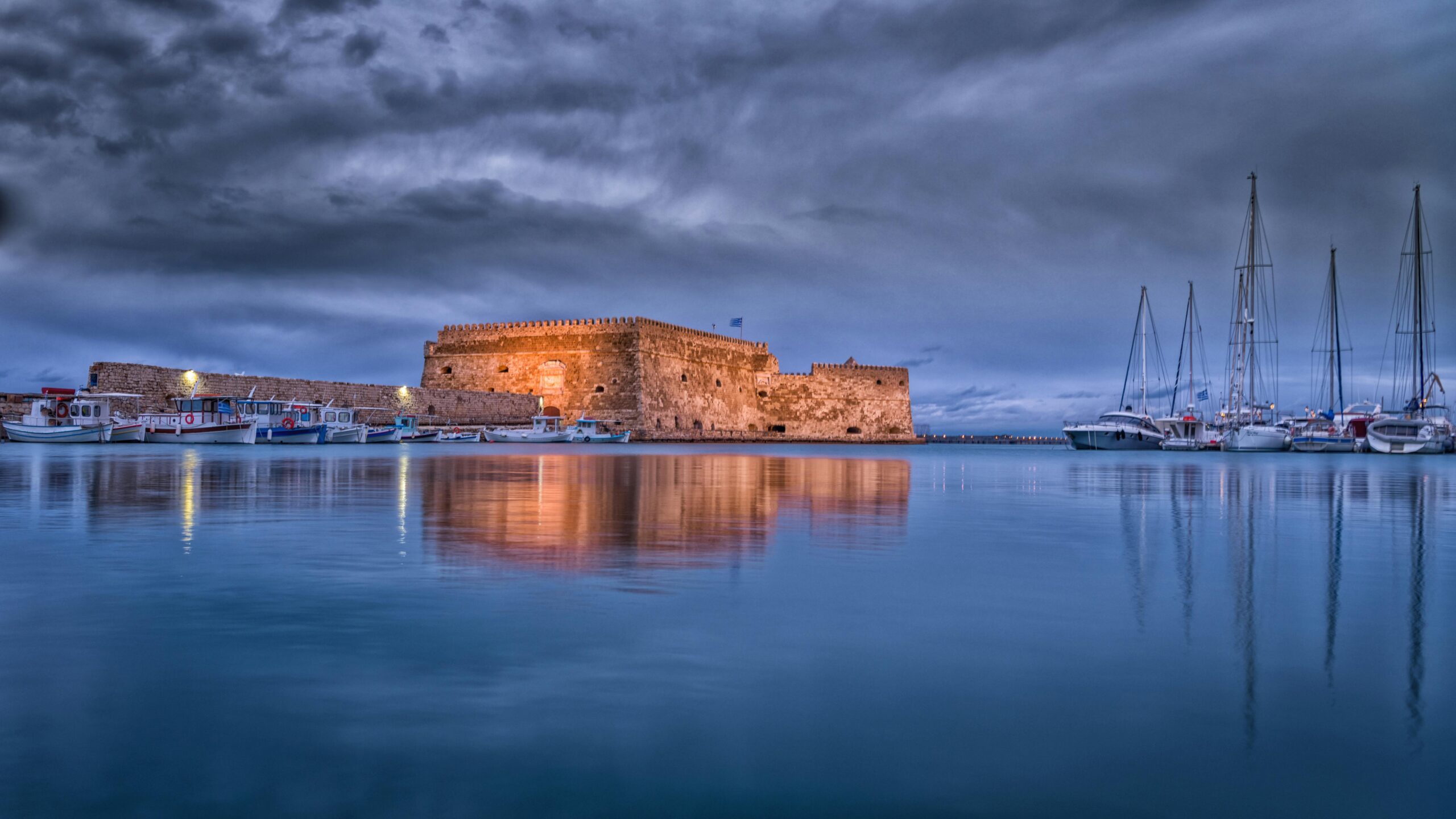
In the background, faint sounds of the sea can be heard — not calm waves, but restless water striking the harbor walls of Heraklion during a summer night. The audience quickly understands that this is not simply a story about a city. It is a story about movement, return, and the invisible tension between memory and escape.
The theatrical play, titled The Last Crossing, unfolds in contemporary Crete and follows the journey of Elena, a woman returning to Heraklion after nearly twenty years abroad. She arrives to settle family affairs following her father’s death, expecting only a brief visit before returning to her carefully structured life in Europe. Instead, the city slowly begins dismantling her emotional certainty.
Each act takes place in a different corner of Heraklion: a fading kafeneio near the port, an old apartment overlooking crowded streets, a roadside taverna somewhere beyond the city limits. Rather than relying on dramatic plot twists, the play builds atmosphere through conversations, silences, and the emotional weight carried by ordinary spaces. Crete itself becomes an active presence on stage — stubborn, warm, proud, and impossible to fully leave behind.
The supporting characters embody different versions of the island’s identity. A taxi driver speaks in poetic fragments about roads leading nowhere and everywhere at once. An aging musician insists that every city remembers the footsteps of those who abandoned it. Elena’s childhood friend, now running a small family business, challenges the idea that success can only exist elsewhere. Their dialogues move naturally between irony, tenderness, and unresolved resentment, reflecting the emotional complexity often found in Mediterranean storytelling.
Visually, the production balances realism with symbolism. Stone walls glow under amber lighting, while projected shadows of moving roads and passing headlights create a constant sense of transition. Traditional Cretan music occasionally emerges before dissolving into silence. The audience feels suspended between past and present, urban life and island memory.
As the final act approaches, Elena begins driving aimlessly through the landscapes surrounding Heraklion at night. The movement itself becomes central to the play’s meaning. Roads turn into emotional spaces where identity is reconsidered and belonging becomes uncertain. The audience realizes that the real conflict was never whether she would stay or leave, but whether she could understand the part of herself still tied to the island.
In the final scene, dawn appears over the Cretan coastline as Elena quietly starts the engine once more. No destination is revealed. Only the feeling of possibility remains — the same freedom many travelers search for when choosing to rent a car heraklion.